


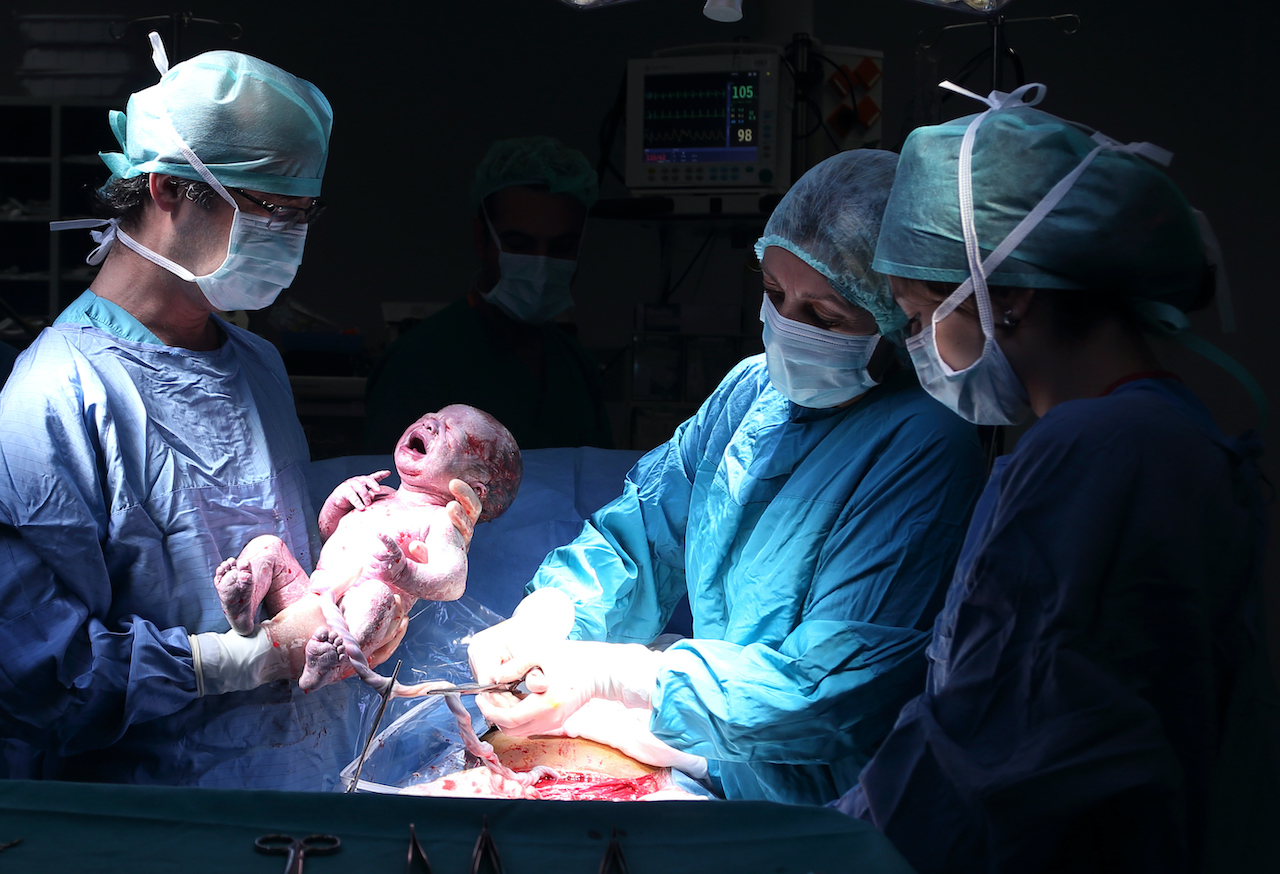
NFHS-6 Alert: C-Section Deliveries Surge in India, Experts Warn of Risks for Mothers and Newborns
While India has made notable progress in maternal and child healthcare, the latest National Family Health Survey (NFHS-6) has flagged a growing concern that health experts say cannot be ignored—the rapid rise in caesarean section (C-section) deliveries across the country.
According to NFHS-6, the proportion of births delivered through C-sections has increased from 21.5 per cent in NFHS-5 to 27.2 per cent nationally. In urban India, the figure has climbed to a worrying 40 per cent, nearly three times higher than the 10-15 per cent range recommended by the World Health Organization (WHO).
Health experts warn that while C-sections can be life-saving when medically necessary, their increasing use raises concerns about maternal recovery, breastfeeding challenges and long-term health outcomes for both mothers and babies.
C-Section Deliveries Increases the Higher Risk of Emergency Hysterectomy: Study
Why Rising C-Section Rates Are Raising Alarm
The survey found that the increase is being driven largely by private healthcare facilities, where C-section rates have risen from 47 per cent to 54 per cent. Nationally, caesarean deliveries in private hospitals were 37 percentage points higher than in public healthcare institutions.
Medical professionals caution that unnecessary surgical births can expose mothers to longer recovery periods, higher risks of infection, increased medical costs and complications in future pregnancies.
Maharashtra’s Private Hospitals Record 56% C-Section Rate
As per a report published by The Times of India, an even more concerning trend in Maharashtra reveals that caesarean deliveries in private hospitals in Maharashtra have reached a staggering 56 per cent. The figure is nearly five times higher than the 10-15 per cent rate recommended by the World Health Organization (WHO), raising questions about the growing dependence on surgical births in the private healthcare sector.
In contrast, government-run hospitals in Maharashtra reported a comparatively lower C-section rate of 33 per cent. While still above the WHO benchmark, the gap highlights a significant difference in delivery practices between public and private healthcare institutions.
Public health experts say such wide disparities warrant closer scrutiny to determine whether all surgical deliveries are medically necessary. They caution that unnecessary C-sections can increase health risks for mothers, delay breastfeeding, extend recovery periods and lead to complications in subsequent pregnancies.
The Maharashtra figures mirror a broader national trend, where private hospitals continue to report substantially higher caesarean delivery rates than public healthcare facilities.
Impact on Breastfeeding and Newborn Health
One of the immediate concerns linked to C-section births is delayed initiation of breastfeeding.
According to Dr Anita Gupta, Additional Director, Obstetrics and Gynaecology, Fortis La Femme, postoperative pain often makes it difficult for mothers to comfortably hold and breastfeed their newborns.
“Post C-section, the postoperative pain makes it uncomfortable for mothers to hold the neonate. In women who have had C-sections, there is delayed onset of lactation and sometimes low milk supply in the first few days,” she said.
Experts note that early breastfeeding plays a critical role in building a newborn’s immunity, reducing infections and improving long-term health outcomes. Any delay in breastfeeding can impact both infant nutrition and mother-child bonding.

Maternal Healthcare Improves Despite Concerns
Despite the rising C-section trend, NFHS-6 reported encouraging improvements in maternal healthcare services.
Nearly 96 per cent of pregnant women received antenatal care during pregnancy, while first-trimester registration increased from 70 per cent to 76.2 per cent.
The percentage of women receiving at least four antenatal care visits rose from 58.5 per cent to 65.2 per cent, reflecting better monitoring of pregnancies and improved healthcare access.
Institutional deliveries also increased from 88.6 per cent to 90.6 per cent, indicating that more women are choosing to give birth in healthcare facilities rather than at home.
Maternal Nutrition Shows Positive Trend
The survey also highlighted gains in maternal nutrition. The proportion of women consuming iron-folic acid supplements for at least 100 days during pregnancy increased significantly from 44.1 per cent to 54.9 per cent.
Health experts say improved nutrition can help reduce pregnancy-related complications and contribute to healthier birth outcomes.
A New Challenge for India’s Healthcare System
NFHS-6 suggests that India is making steady progress in reducing maternal and child health risks. However, the growing dependence on caesarean deliveries is emerging as a new public health challenge.
With India’s Total Fertility Rate remaining stable at 2.0—below the replacement level of 2.1—the focus is increasingly shifting from expanding healthcare access to ensuring quality, evidence-based maternal care.
Experts argue that C-sections should remain a medically driven intervention rather than a routine practice. They warn that without stronger monitoring and awareness, rising surgical births could undermine some of the gains India has achieved in maternal and newborn health.
Key NFHS-6 Findings on Maternal Health
- National C-section rate increased from 21.5% to 27.2%.
- Urban India’s C-section rate reached 40%.
- Private hospital C-section rate rose from 47% to 54%.
- Maharashtra’s private hospitals reported a 56% C-section rate.
- Government hospitals in Maharashtra recorded a 33% C-section rate.
- Nearly 96% of pregnant women received antenatal care.
- First-trimester pregnancy registration increased from 70% to 76.2%.
- Four or more ANC visits rose from 58.5% to 65.2%.
- Institutional births increased from 88.6% to 90.6%.
- Iron-folic acid consumption during pregnancy rose from 44.1% to 54.9%.
Source: National Family Health Survey (NFHS-6), Ministry of Health and Family Welfare | The Times of India