

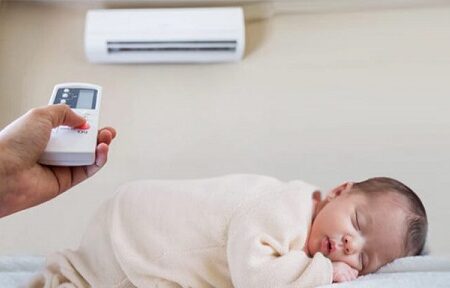
Confused? How to keep baby safe while using an Air Conditioner


Many households find themselves adjusting to accommodate all members in a single AC-cooled room, including infants. While it’s common to have babies sleep in AC rooms, it is crucial to take precautions to ensure comfort and well-being of the new-born. Here are a few things to keep in mind while putting your baby to sleep in an air-conditioned room:


1. It is normal to make infants sleep in the AC, but some precautions must be taken so that they do not feel cold. Avoid setting it too low, as this can cause discomfort and disrupt your baby’s sleep.
2. Pay close attention while setting the temperature of the AC. Optimal temperatures range between 23 to 25 degrees Celsius to prevent the baby from feeling too cold. In between, you can slightly reduce it and then increase it again.
3. Ensure your baby is adequately covered with a blanket or sheet to maintain warmth while sleeping. Avoid dressing them only in a vest, as this may lead to colds, coughs, or phlegm.
4. Position your baby away from direct airflow to prevent cold air from blowing directly on their face, soles, or head. Make the baby sleep on one side of the baby. A child may get a headache due to wind blowing on his head.


5. Child’s skin is delicate and becomes dry easily. To combat dryness caused by prolonged AC exposure, apply oil or moisturiser to your baby’s skin. Mustard oil can be particularly beneficial for chest, stomach, and back areas to retain moisture and to keep them warm.
6. Ensure AC cleaning every week to prevent dust and dirt accumulation, which can cause allergies and respiratory issues in babies.
Parents can create a comfortable and safe environment by following these precautions for their babies to sleep soundly in air-conditioned rooms, mitigating potential health risks associated with the use of AC.

Credit: News18

Hot this week

Hormonal Contraceptives May Lower Risk of Chronic Rhinosinusitis in Women, Study Finds

A comprehensive new study involving nearly 240,000 women has...

WHO Approves First Malaria Treatment for Newborns and Infants

The World Health Organization (WHO) has granted prequalification to...

Low Birth Weight? Study Warns of Serious Heart Risks in Adulthood

Low Birth Weight is increasingly being linked to serious...

Preventable Hypertension Complications Endanger Mothers and Newborns: Study Finds

Hypertensive disorders of Pregnancy (HDP) continue to be a major threat to maternal and neonatal health, particularly in developing countries like India. A recent study conducted at Cama and Albless Hospital, a tertiary care teaching hospital in Mumbai, highlights the clinical profile and outcomes of pregnant women affected by pregnancy-related hypertension.

Topics

Hormonal Contraceptives May Lower Risk of Chronic Rhinosinusitis in Women, Study Finds

A comprehensive new study involving nearly 240,000 women has...

WHO Approves First Malaria Treatment for Newborns and Infants

The World Health Organization (WHO) has granted prequalification to...

Low Birth Weight? Study Warns of Serious Heart Risks in Adulthood

Low Birth Weight is increasingly being linked to serious...

Preventable Hypertension Complications Endanger Mothers and Newborns: Study Finds

Hypertensive disorders of Pregnancy (HDP) continue to be a major threat to maternal and neonatal health, particularly in developing countries like India. A recent study conducted at Cama and Albless Hospital, a tertiary care teaching hospital in Mumbai, highlights the clinical profile and outcomes of pregnant women affected by pregnancy-related hypertension.

Maternal Health Crisis in the U.S. Puts Infants at Higher Risk, New Study Finds

Improving women’s health is vital not only for mothers...

Two in Three Women Have Preventable Risk Factors for Birth Defects, Study Finds

According to the researchers, these factors can disrupt one-carbon...

Study Finds Toxic Lead and Uranium in Children’s Blood in Punjab and Chandigarh

Toxic metals like lead and uranium in children’s blood...

Related Articles

Translate »