

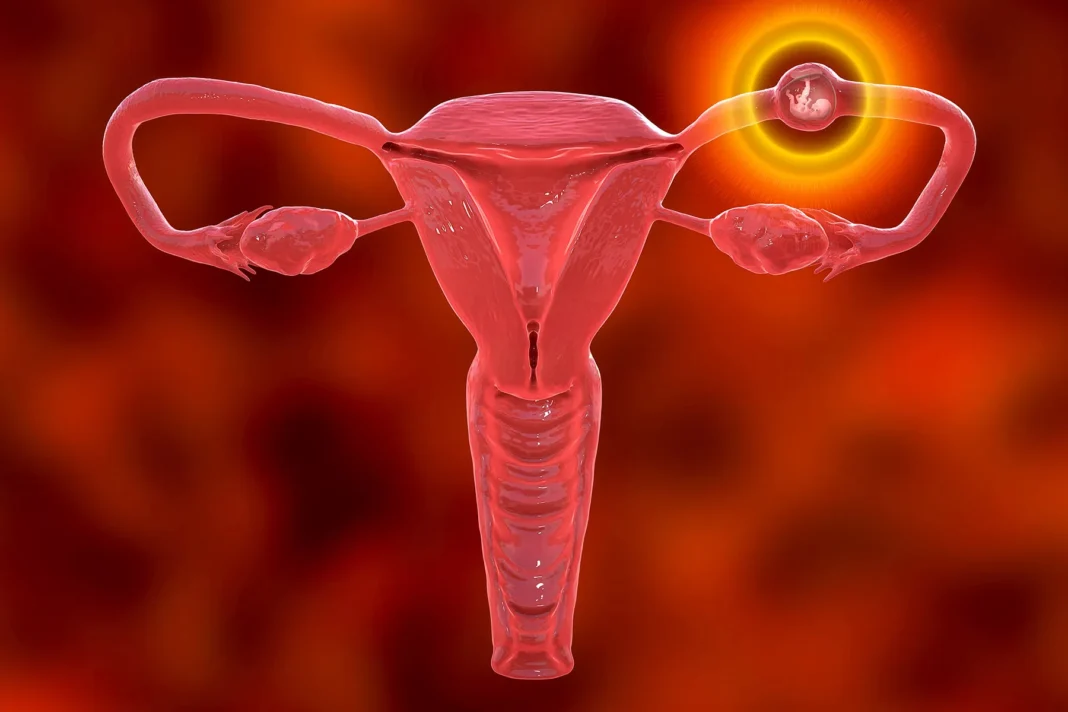

An ectopic pregnancy — a pregnancy that begins outside the womb, where it simply cannot thrive.
Is the uterus the only place a pregnancy can happen? Well, most of us picture pregnancy beginning in the uterus — a fertilized egg attaches safely into its lining, slowly transforming into an embryo, and eventually a baby. But what happens when nature takes an unexpected turn?
Imagine a fertilized egg starting its journey, only to lose its way and settle in the wrong place — like the narrow fallopian tube. This rare and potentially dangerous detour leads to a condition known as ectopic pregnancy — a pregnancy that begins outside the womb, where it simply cannot thrive.
An ectopic pregnancy : fetus was developing inside her liver
Last week in Bulandshahr, Uttar Pradesh, a woman had been experiencing severe abdominal pain and frequent vomiting for a long time. When doctors conducted an MRI scan to investigate her condition, they were shocked by the findings. The scan revealed that a fetus was developing inside her liver — an extremely rare and life-threatening form of ectopic pregnancy known as intrahepatic ectopic pregnancy.

“An ectopic pregnancy is a serious medical condition where a fertilized egg implants outside the uterus, typically in a fallopian tube. This type of pregnancy is not viable and can be life-threatening if not treated promptly,” said Dr Tushar Palve. If you suspect an ectopic pregnancy, seek medical attention immediately.
An ectopic pregnancy occurs when a fertilized egg implants and grows outside the main cavity of the uterus. It most often occurs in a fallopian tube, which carries eggs from the ovaries to the uterus. This type of ectopic pregnancy is called a tubal pregnancy.
Fallopian Tubes, The Most Common Site
Fallopian Tubes is the most common site, accounting for about 90-95% of cases. Within the fallopian tubes, ectopic pregnancies can occur in the:
- Ampulla: The widest part of the tube, where about 70-80% of tubal ectopic pregnancies occur.
- Isthmus: The narrower section of the tube, closer to the uterus, where about 12-15% of tubal ectopic pregnancies occur.
- Fimbriae: The fringed end of the tube, where about 5-8% of tubal ectopic pregnancies occur.
- Interstitial: The portion of the tube that traverses the muscular wall of the uterus, accounting for about 2-3% of ectopic pregnancies.
Sometimes, an ectopic pregnancy occurs in other areas of the body, which connects to the vagina. Though less common, ectopic pregnancies can also occur in:
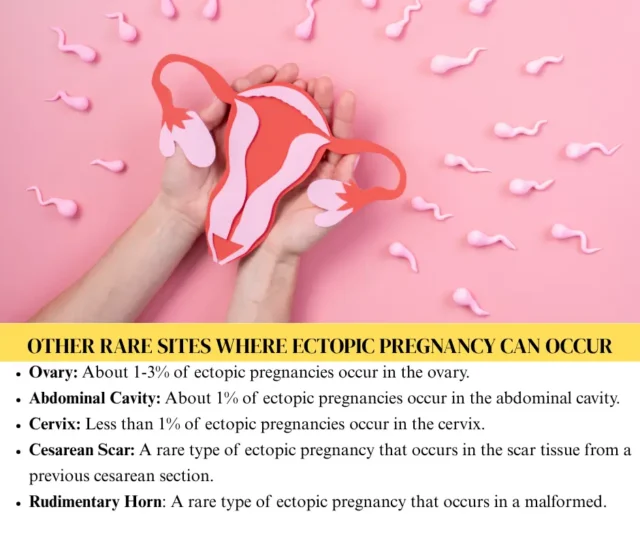
An ectopic pregnancy can’t proceed normally. The fertilized egg can’t survive, and the growing tissue may cause life-threatening bleeding, if left untreated.

