

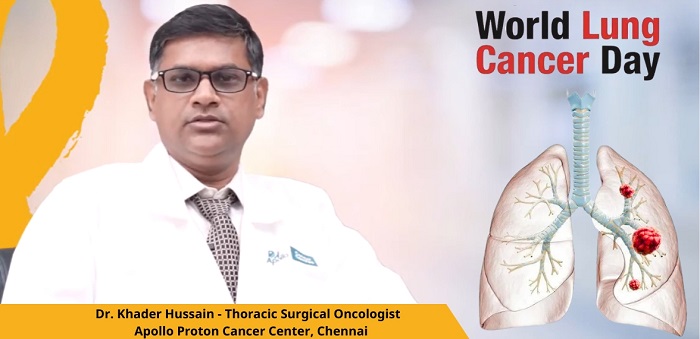
World Lung Cancer Day: Early Detection Can Make All the Difference in Lung Cancer

Lung cancer is one of the most common and deadliest forms of cancer globally, accounting for a significant number of cancer-related deaths each year. What makes it particularly challenging is that symptoms often appear in the advanced stages, when treatment becomes more complicated and prognosis less favourable. This is why awareness and early intervention are absolutely critical.

World Lung Cancer Day, observed on August 1st, is a timely reminder to take stock of our respiratory health. While smoking remains the most well-known cause, non-smokers too can develop lung cancer due to factors like air pollution, second-hand smoke, occupational exposure to carcinogens, and genetic predisposition.

Dr. Khader Hussain, Thoracic Surgical Oncologist

Common warning signs include a persistent cough, chest pain, shortness of breath, hoarseness, unexplained weight loss, and frequent respiratory infections. These symptoms are often mistaken for more benign illnesses, causing delays in diagnosis.

Fortunately, advancements in medical imaging, bronchoscopy, and biopsy techniques have improved early detection rates. In addition, surgical options today are more precise, less invasive, and often allow patients to retain lung function. Treatments such as targeted therapy and immunotherapy have opened new doors for patients with advanced-stage lung cancer, offering renewed hope and improved survival.

But no treatment can substitute the power of early detection. For high-risk individuals – especially those above 40 with a history of smoking or prolonged exposure to pollutants – regular screening should be considered. Low-dose CT scans can help identify tumors at a stage when they are still operable and potentially curable.

As an oncosurgeon, I have witnessed first-hand how timely action can change the course of this disease. My appeal is simple: do not ignore persistent respiratory symptoms. Seek medical guidance promptly. It could save your life or that of someone you love.

This World Lung Cancer Day, let us commit to greater awareness, routine screening for those at risk, and removing the stigma often associated with lung cancer. Early intervention saves lives – let’s not wait for symptoms to become severe before we act.

By Dr. Khader Hussain, Thoracic Surgical Oncologist

Hot this week

Preventable Hypertension Complications Endanger Mothers and Newborns: Study Finds

Hypertensive disorders of Pregnancy (HDP) continue to be a major threat to maternal and neonatal health, particularly in developing countries like India. A recent study conducted at Cama and Albless Hospital, a tertiary care teaching hospital in Mumbai, highlights the clinical profile and outcomes of pregnant women affected by pregnancy-related hypertension.

Maternal Health Crisis in the U.S. Puts Infants at Higher Risk, New Study Finds

Improving women’s health is vital not only for mothers...

Two in Three Women Have Preventable Risk Factors for Birth Defects, Study Finds

According to the researchers, these factors can disrupt one-carbon...

Study Finds Toxic Lead and Uranium in Children’s Blood in Punjab and Chandigarh

Toxic metals like lead and uranium in children’s blood...

Gynaecologists to Use AI for Reducing Maternal Mortality in India

Maternal and childcare is one of India’s key health...

Topics

Preventable Hypertension Complications Endanger Mothers and Newborns: Study Finds

Hypertensive disorders of Pregnancy (HDP) continue to be a major threat to maternal and neonatal health, particularly in developing countries like India. A recent study conducted at Cama and Albless Hospital, a tertiary care teaching hospital in Mumbai, highlights the clinical profile and outcomes of pregnant women affected by pregnancy-related hypertension.

Maternal Health Crisis in the U.S. Puts Infants at Higher Risk, New Study Finds

Improving women’s health is vital not only for mothers...

Two in Three Women Have Preventable Risk Factors for Birth Defects, Study Finds

According to the researchers, these factors can disrupt one-carbon...

Study Finds Toxic Lead and Uranium in Children’s Blood in Punjab and Chandigarh

Toxic metals like lead and uranium in children’s blood...

Gynaecologists to Use AI for Reducing Maternal Mortality in India

Maternal and childcare is one of India’s key health...

Only 4% of Young Indian Women Exercise Daily, Survey Reveals

Only 3.9% of young women aged 15-29 exercise daily,...

Beyond the Glamour: Celebrities Share Emotional Struggles During Childbirth

Their stories shed light on the hidden struggles of...

UNICEF’s Call to Action: Tackling the Rising Burden of NCDs in Children and Adolescents

Unlike infectious diseases, NCDs are not passed from person...

Related Articles

Translate »