
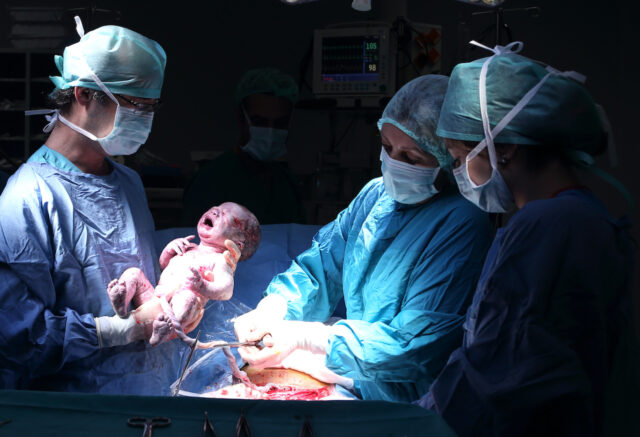
A study by doctors from Mumbai’s Cama and Albless Hospital has revealed a concerning link between Caesarean section (C-section) deliveries and emergency obstetric hysterectomies — a life-saving procedure where the uterus is surgically removed following childbirth complications.
Titled “Hope Amidst Crisis: Emergency Obstetric Hysterectomy“, the research analysed 11,511 deliveries over a four-year period, of which 5,398 (46.8%) were C-sections. During this time, 22 emergency hysterectomies were conducted: 16 following C-sections and 4 after vaginal deliveries.
- Study covered 11,511 deliveries over 4 years
- 5,398 C-sections (46.8%) performed
- 22 emergency hysterectomies: 16 after C-sections, 4 after vaginal deliveries, 2 cases linked to placenta accreta
The study was conducted by a team of doctors from Grant Government Medical College and J.J. Group of Hospitals, including Dr. Tushar T. Palve, Dr. Samiksha Dhama, Dr. Ashwini Sonkamble, Dr. Harsha Rajani, and Dr. Kumari Ankita.
The study found that the rate of emergency hysterectomy was slightly higher in Caesarean section deliveries, with 1 in every 245 C-section cases requiring the procedure, compared to 1 in every 278 vaginal deliveries. The primary medical reasons behind these emergency surgeries were postpartum haemorrhage (PPH) — severe bleeding after childbirth — and placental abnormalities, particularly placenta accreta, a serious condition where the placenta attaches too deeply into the uterine wall.
The study’s key observations revealed that the majority of emergency hysterectomy cases occurred in women aged 30 to 39 years, many of whom had already given birth to two or three children. Notably, nine cases involved younger women in the 20 to 29 age group, indicating that the risk is not limited to older mothers. Additionally, two of the hysterectomy cases were directly linked to placenta accreta, a severe and potentially life-threatening placental complication where the placenta grows too deeply into the uterine wall.
Hysterectomy Rate
- 1 in 278 Vaginal Deliveries
- 1 in 245 Caesarean Deliveries
- 9 cases between 20-29 Age

Dr. Tushar T. Palve, Superintendent of Cama Hospital and the lead researcher, explained that in critical cases involving uncontrollable postpartum bleeding or severe infections, performing an emergency hysterectomy was often the only way to save the mother’s life. These were life-threatening situations where immediate surgical intervention was necessary to prevent further complications or death.
Impact On Woman Health Post-Hysterectomy
Hysterectomy is lifesaving, it comes with serious long-term consequences. The removal of the uterus permanently ends a woman’s ability to conceive, ruling out even options like IVF. In cases where the blood supply to the ovaries is affected, it can also trigger early menopause. Many women face hormonal imbalances, emotional breakdowns, and prolonged psychological distress. The emotional impact is especially profound in women under 30, who often struggle with the sudden and irreversible loss of their reproductive future.
How to Lower the Risk of Hysterectomy?
The study offers crucial guidance for expectant mothers, particularly those at higher risk due to previous surgeries or existing health issues. Pregnant women should remain physically active throughout pregnancy and focus on strengthening their pelvic muscles to support natural delivery. Whenever medically possible, vaginal delivery should be preferred over C-section.
For women who have already undergone two C-sections or have conditions such as low haemoglobin, bleeding disorders, or placenta-related complications, taking extra precautions is crucial. The patient, relatives or the hospital needs to be prepared with arrangement of blood units in advance, be prepared for possible ICU admission, and ensure that medications to control bleeding are readily available.
- Total Hysterectomy: 22
- Normal/Vaginal Deliveries: 04
- Caesarean Section Deliveries: 16
- Placenta Accreta :02
- Main causes: Postpartum hemorrhage, placental abnormalities
- High risk in women aged 30–39 with 2–3 children
- Women under 30 suffered greater emotional trauma
- Effects: Infertility, early menopause, mental distress
- Advice: Stay active, prefer vaginal delivery, prepare if high-risk