

While the study does not prove causation, it highlights a significant association between caregiving experiences and early brain growth.
Preterm infants born before 32 weeks who received more skin-to-skin contact during hospitalization showed stronger brain development in regions tied to emotion and stress regulation than those who received less, according to a study published in Neurology. While the study does not prove causation, it highlights a significant association between caregiving experiences and early brain growth.
“Skin-to-skin contact in preterm infants has been shown to have many benefits, with previous studies linking it to improved bonding, sleep, heart and lung function, and growth, as well as reduced pain and stress,” said study author Katherine E. Travis, Ph.D., of Burke Neurological Institute, White Plains, New York. “Our findings in very preterm infants suggest skin-to-skin care may also shape early brain development, underscoring the importance of these experiences during the first weeks of life.”
The study followed 88 preterm infants with an average gestational age of 29 weeks and average birth weight of 2.65 pounds. The babies remained in the hospital for about two months, and researchers tracked the frequency and duration of skin-to-skin holding—also called kangaroo care—throughout hospitalization.
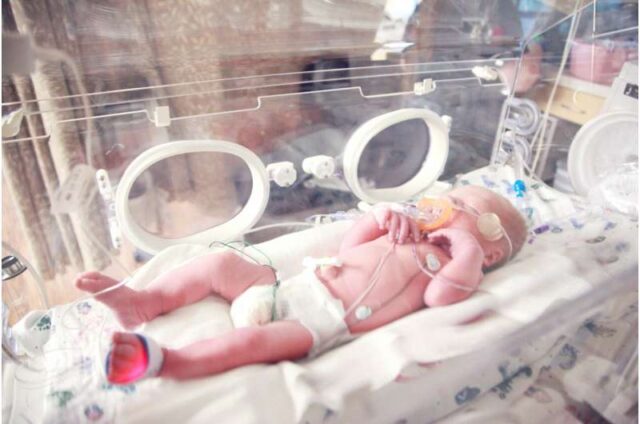
Families typically visited once per day, and when skin-to-skin care was provided, sessions lasted about 70 minutes on average, with 73% led by mothers. Across the full hospital stay, infants received an average of 24 minutes of skin-to-skin care per day.
Before discharge, around the time the infants reached full-term age (40 weeks), each underwent a brain scan to assess white matter development. White matter, the brain’s communication network, can be studied by examining how water moves through brain tissue.
Results showed that longer skin-to-skin sessions were linked to stronger brain development in two key regions:
- The cingulum, which supports attention and emotional regulation.
- The anterior thalamic radiations, which connect brain areas involved in emotional processing and memory.
Specifically, longer sessions were associated with higher mean diffusivity—greater freedom of water movement—in these areas, suggesting more advanced tissue organization. They were also linked to lower fractional anisotropy in the anterior thalamic radiations, another marker of white matter development.
Similarly, infants who received more total daily minutes of skin-to-skin care showed these same patterns: higher mean diffusivity and lower fractional anisotropy in the anterior thalamic radiations. These associations remained significant even after accounting for gestational age, age at scan, socioeconomic status, and family visitation frequency.
“Our findings add to growing evidence that white matter development is sensitive to a preterm infant’s experience while in the hospital,” said Travis. “Skin-to-skin care not only provides family bonding but may also foster new brain connections, supporting healthier development overall.”
The study reinforces the idea that early caregiving practices—such as regular skin-to-skin holding—could play a vital role in shaping both immediate and long-term outcomes for preterm infants.