A Simple Blood Test May Predict Pregnancy Complications Early

Serious pregnancy complications often show their first symptoms midway through pregnancy. High blood pressure and dark urine around 20 weeks can indicate preeclampsia, while excessive thirst and frequent urination at 24 weeks may signal gestational diabetes. Though blood tests can confirm these conditions, that typically happens only after symptoms appear—when “the damage has already been done,” says Surendra Sharma, an obstetrician and molecular biologist at the University of Texas Medical Branch.

To intervene earlier, researchers are working on a tool to detect complications before symptoms begin. A promising new approach comes from Carlos Palma and his team at the University of Queensland. Their work focuses on placental extracellular vesicles (EVs)—tiny pockets of molecules released by cells throughout the body that reflect their state and activity.
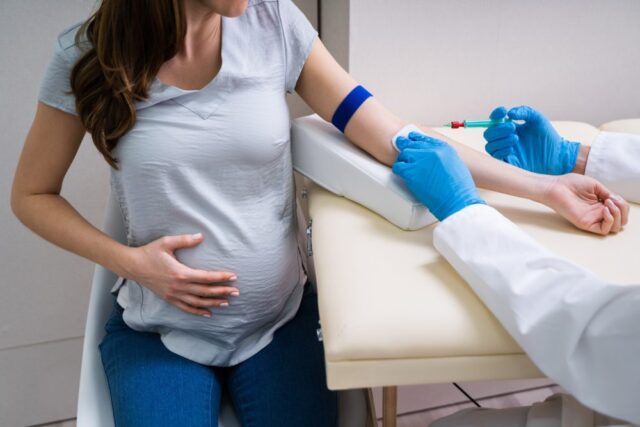
Image: Medical Updates Online

A lot is still unknown about the precise relationship between health and EVs for various tissues and cell types, but researchers have linked disease and distress to changes in both the composition and the quantify of EVs released by the placenta. Focusing on the latter, Palma’s team developed a sensor to measure the concentration of placental EVs in maternal blood, aiming to predict risks well before symptoms show.

The team analyzed blood plasma from 201 women around 13 weeks into their pregnancies, on average. Half of the women had normal pregnancies, and the other half developed a serious complication. These included preeclampsia, gestational diabetes, preterm birth, and others. Using machine learning, they identified two key protein markers—placental alkaline phosphatase (PLAP) and CD9—as the best indicators of risk.

They then designed a sensor using magnetic beads coated with PLAP antibodies. These beads, engineered with enzyme-like properties, react with a color-changing dye (TMB), turning it blue in the presence of target EVs. When applied to a CD9-coated surface and washed, only EVs expressing both markers remained. The deeper the blue, the more EVs were present, indicating a higher likelihood of complications.

This method proved particularly effective in identifying women at risk for gestational diabetes. Andy Powell, a biochemist at Liverpool John Moores University, praised the approach, comparing it to a pregnancy test—simple but powerful. He also noted the advantage of using stable artificial enzymes over biological ones.

However, some experts remain cautious. While the test measures EV quantity, it doesn’t identify the specific messages those vesicles carry. “They haven’t really looked in detail at what signals these EVs might be carrying,” said Iain Dykes, Powell’s colleague.

Sharma also expressed skepticism about relying solely on EV counts, which have shown inconsistent results across studies. He believes the technology could be stronger if tailored with disease-specific markers: “It’s a very wonderful starting point,” he said. “We need to go to the finish line.”


Hot this week

UP Quadruplets Birth Case: Woman in Uttar Pradesh Gives Birth to 4 Babies Over 5 Days

A 31-year-old woman from Uttar Pradesh delivered four babies over five days in a rare quadruplet pregnancy case. Doctors say the successful normal deliveries make it an extraordinary medical achievement.

यूपी में महिला ने दिया 5 दिनों में 4 बच्चों को जन्म : डॉक्टर भी हैरान

उत्तर प्रदेश के संभल जिले की महिला ने 5 दिनों के अंतराल में 4 बच्चों को जन्म दिया। डॉक्टरों के अनुसार यह बेहद दुर्लभ मेडिकल मामला है, क्योंकि चारों बच्चों की नॉर्मल डिलीवरी हुई।

Rajasthan’s ” Yashoda Mothers ” Donate Breast Milk at Barmer Hospital to Save Newborn Babies

In the heart of Rajasthan, the Mother Milk Bank at Barmer District Hospital is creating a life-saving impact for newborn babies through an extraordinary act of kindness. More than 3,500 women, lovingly referred to as “Yashoda Mothers,” have donated breast milk to help infants who are unable to receive nourishment from their biological mothers. Inspired by the story of Yashoda and Lord Krishna, the initiative reflects the spirit of selfless motherhood and humanity.

मुंबई में 3 महीने के बच्चे की ब्रेन ट्यूमर सर्जरी ने बचाई जान

मुंबई में 3 महीने के बच्चे की ब्रेन ट्यूमर सर्जरी सफल रही, जिसमें डॉक्टरों ने जटिल ऑपरेशन कर जानलेवा ट्यूमर हटाया। समय पर पहचान और इलाज से शिशु को नई जिंदगी मिली, जो माता-पिता के लिए किसी चमत्कार से कम नहीं है।

Topics

UP Quadruplets Birth Case: Woman in Uttar Pradesh Gives Birth to 4 Babies Over 5 Days

A 31-year-old woman from Uttar Pradesh delivered four babies over five days in a rare quadruplet pregnancy case. Doctors say the successful normal deliveries make it an extraordinary medical achievement.

यूपी में महिला ने दिया 5 दिनों में 4 बच्चों को जन्म : डॉक्टर भी हैरान

उत्तर प्रदेश के संभल जिले की महिला ने 5 दिनों के अंतराल में 4 बच्चों को जन्म दिया। डॉक्टरों के अनुसार यह बेहद दुर्लभ मेडिकल मामला है, क्योंकि चारों बच्चों की नॉर्मल डिलीवरी हुई।

Rajasthan’s ” Yashoda Mothers ” Donate Breast Milk at Barmer Hospital to Save Newborn Babies

In the heart of Rajasthan, the Mother Milk Bank at Barmer District Hospital is creating a life-saving impact for newborn babies through an extraordinary act of kindness. More than 3,500 women, lovingly referred to as “Yashoda Mothers,” have donated breast milk to help infants who are unable to receive nourishment from their biological mothers. Inspired by the story of Yashoda and Lord Krishna, the initiative reflects the spirit of selfless motherhood and humanity.

मुंबई में 3 महीने के बच्चे की ब्रेन ट्यूमर सर्जरी ने बचाई जान

मुंबई में 3 महीने के बच्चे की ब्रेन ट्यूमर सर्जरी सफल रही, जिसमें डॉक्टरों ने जटिल ऑपरेशन कर जानलेवा ट्यूमर हटाया। समय पर पहचान और इलाज से शिशु को नई जिंदगी मिली, जो माता-पिता के लिए किसी चमत्कार से कम नहीं है।

Rare 3-Month-Old Baby Brain Tumour Surgery in Mumbai | Gives Infant Second Chance at Life

A 3-month-old baby brain tumour surgery in Mumbai saved an infant after doctors at Bai Jerbai Wadia Hospital for Children removed a rare, life-threatening tumour.

Infant Liver Transplant in India: 18 महीने के बच्चे को मिला नया जीवन

एक दुर्लभ और अत्यंत जटिल infant liver transplant in...

Rare Infant Liver Transplant Saves 18-Month-Old: Challenges, Risks, and Hope for the Future

A rare and highly complex infant liver transplant in India has given a new lease of life to an 18-month-old child suffering from a serious metabolic disorder. The procedure highlights both the medical challenges of operating on infants and the promising future such interventions can offer.

Related Articles

Translate »