Even Newborns Prefer Kindness Over Cruelty, Reveals Study

A new study suggests that human beings may be born with a basic sense of social goodness. Researchers have found that infants as young as five days old can tell the difference between prosocial (helpful, friendly) and antisocial (hindering, unfriendly) behavior—and show a clear preference for the prosocial.

“These babies have almost no experience with the social world, and yet they’re already picking up on friendly versus unfriendly interactions, on helping versus hindering. That could be telling us something really important about human nature,” said Dr. Kiley Hamlin, professor of psychology at the University of British Columbia, who co-led the study with Dr. Alessandra Geraci, assistant professor of educational sciences at the University of Catania, Italy. The findings were recently published in Nature Communications.

Watching for Kindness

The researchers showed 90 newborns short, animated videos. In one, a ball tried to climb a hill. A second ball either helped push it up (prosocial) or pushed it down (antisocial). The babies’ eyes consistently lingered longer on the helpful scene.
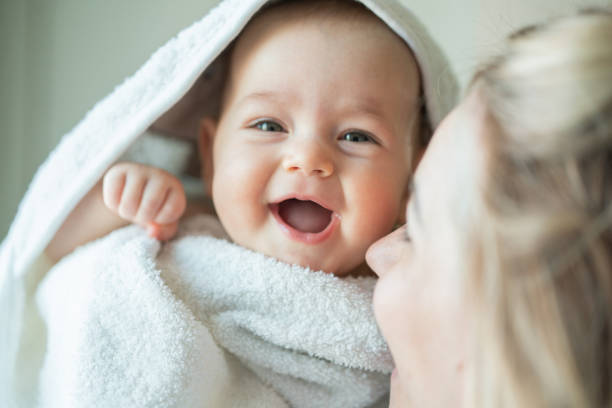
Newborn
Image: istock

In another set of videos, one ball moved toward another—as if to greet it—while in the alternate version, it moved away, avoiding contact. Again, the babies looked longer at the friendly, approaching ball.

To make sure the babies weren’t merely reacting to motion, researchers also played control videos where the balls moved without any implied social interaction. In these cases, infants showed no preference, indicating they were responding to the social meaning of the interactions.

“This tells us that babies aren’t just reacting to patterns of motion,” said Dr. Hamlin. “They seem to be responding to the social meaning behind those motions.”

But Can Newborns Even See That Well?

Newborn vision is often underestimated. While they can’t see well far away, Dr. Hamlin explained that they can see well up close, especially when motion is involved.

“Our animations were presented right in front of babies’ faces, in high contrast, with simple motions that repeated over and over. That’s exactly the kind of thing newborns are good at detecting,” she said.

Born to Care?

The study builds on previous research showing that older infants (6–10 months) prefer helpful characters. But this is the first demonstration in days-old babies, suggesting that these preferences aren’t learned.

“Five-day-old babies are asleep much of the time and haven’t observed many—if any—social interactions,” Dr. Hamlin said.

“Even if they had, their poor distance vision means they likely couldn’t have processed them unless they occurred directly in front of their faces.”

That makes it unlikely the babies’ prosocial preferences came from experience alone.

The Roots of Morality?

These findings provide new fuel for the ongoing debate about whether morality is learned or innate.

“There’s been a lot of debate about whether morality is learned or innate,” said Hamlin. “This study doesn’t settle that debate, but it certainly pushes the needle toward the idea that some parts of our moral sense are built in.”

Even before they can smile, speak, or sit up, babies are watching the world—and many are already rooting for the good guys.


Source: News Medical

Hot this week

Rajasthan’s ” Yashoda Mothers ” Donate Breast Milk at Barmer Hospital to Save Newborn Babies

In the heart of Rajasthan, the Mother Milk Bank at Barmer District Hospital is creating a life-saving impact for newborn babies through an extraordinary act of kindness. More than 3,500 women, lovingly referred to as “Yashoda Mothers,” have donated breast milk to help infants who are unable to receive nourishment from their biological mothers. Inspired by the story of Yashoda and Lord Krishna, the initiative reflects the spirit of selfless motherhood and humanity.

मुंबई में 3 महीने के बच्चे की ब्रेन ट्यूमर सर्जरी ने बचाई जान

मुंबई में 3 महीने के बच्चे की ब्रेन ट्यूमर सर्जरी सफल रही, जिसमें डॉक्टरों ने जटिल ऑपरेशन कर जानलेवा ट्यूमर हटाया। समय पर पहचान और इलाज से शिशु को नई जिंदगी मिली, जो माता-पिता के लिए किसी चमत्कार से कम नहीं है।

Rare 3-Month-Old Baby Brain Tumour Surgery in Mumbai | Gives Infant Second Chance at Life

A 3-month-old baby brain tumour surgery in Mumbai saved an infant after doctors at Bai Jerbai Wadia Hospital for Children removed a rare, life-threatening tumour.

Infant Liver Transplant in India: 18 महीने के बच्चे को मिला नया जीवन

एक दुर्लभ और अत्यंत जटिल infant liver transplant in...

Topics

Rajasthan’s ” Yashoda Mothers ” Donate Breast Milk at Barmer Hospital to Save Newborn Babies

In the heart of Rajasthan, the Mother Milk Bank at Barmer District Hospital is creating a life-saving impact for newborn babies through an extraordinary act of kindness. More than 3,500 women, lovingly referred to as “Yashoda Mothers,” have donated breast milk to help infants who are unable to receive nourishment from their biological mothers. Inspired by the story of Yashoda and Lord Krishna, the initiative reflects the spirit of selfless motherhood and humanity.

मुंबई में 3 महीने के बच्चे की ब्रेन ट्यूमर सर्जरी ने बचाई जान

मुंबई में 3 महीने के बच्चे की ब्रेन ट्यूमर सर्जरी सफल रही, जिसमें डॉक्टरों ने जटिल ऑपरेशन कर जानलेवा ट्यूमर हटाया। समय पर पहचान और इलाज से शिशु को नई जिंदगी मिली, जो माता-पिता के लिए किसी चमत्कार से कम नहीं है।

Rare 3-Month-Old Baby Brain Tumour Surgery in Mumbai | Gives Infant Second Chance at Life

A 3-month-old baby brain tumour surgery in Mumbai saved an infant after doctors at Bai Jerbai Wadia Hospital for Children removed a rare, life-threatening tumour.

Infant Liver Transplant in India: 18 महीने के बच्चे को मिला नया जीवन

एक दुर्लभ और अत्यंत जटिल infant liver transplant in...

Rare Infant Liver Transplant Saves 18-Month-Old: Challenges, Risks, and Hope for the Future

A rare and highly complex infant liver transplant in India has given a new lease of life to an 18-month-old child suffering from a serious metabolic disorder. The procedure highlights both the medical challenges of operating on infants and the promising future such interventions can offer.

Hormonal Contraceptives May Lower Risk of Chronic Rhinosinusitis in Women, Study Finds

A comprehensive new study involving nearly 240,000 women has...

WHO Approves First Malaria Treatment for Newborns and Infants

The World Health Organization (WHO) has granted prequalification to...

Related Articles

Translate »